MESSAI · Investor brief · May 2026
Before you build,
you simulate.
Industrial operators spend billions disposing of waste that contains billions in recoverable energy, metals, and nutrients. MessAI is the design layer that lets them act on it — physics-grounded, uncertainty-calibrated, traceable to source.
By the numbers · verified snapshot
Out-of-sample 95% CI coverage
97.98%
940 held-out observations
Expected calibration error
1.96%
overall · proven on held-out data
Research papers structured
23,480
9,511 with v2 extraction
Measured parameter values
195,846
extracted, normalized, traceable
Logan retrospective backtest
93%
within ±25% on 14 reference reactors
Direct competitors
0
no vertical MES design platform exists
Every number above is verified against an on-disk artifact in this repository — full provenance and live counts on /proof.
What MessAI is
Design software for waste-to-value reactors.
Microbial electrochemical systems (MES) use electricity and microbes to recover energy, metals, nutrients, and fuels from waste streams operators currently pay to dispose of. The hardware works. The math of which design will work for a specific waste stream doesn’t — until now.
We’ve structured the global MES literature into a causal knowledge graph — 9,511 papers, 195,846 extracted measurements — with hierarchical-Bayesian priors and conformal-calibrated uncertainty. A customer uploads a waste profile and a target outcome; MessAI ranks designs, quantifies confidence, and recommends the cheapest experiment to de-risk scale-up.
Cadence does this for chips at $3B/year. AspenTech does it for chemical plants at $1B/year. Neither serves MES.
Live today · explore the actual platform
Not a demo deck. Click into the real surfaces.
01 · Evidence
The proof dashboard
Out-of-sample 95%-CI coverage by stratum, calibration ECE, multi-scale moat, Logan retrospective backtest, and honest gaps — every number sourced from an on-disk artifact you can verify.
See the live proof →
02 · Prediction
Parameter sweep
Real ML inference (not a mock) against 8 published reactor datasets. Pick a design, sweep a parameter, see predicted performance with credible intervals and traceable provenance.
Run a prediction →
03 · Personas
Persona-tuned onboarding
6 audience flows: industrial operations, researcher, grant strategist, learner, student, process engineer. Each gets a tailored entry point into the same underlying knowledge graph.
Pick a path →
04 · Research
Hunter · multiscale validation
The per-cell Butler-Volmer identifiability dashboard — the tool we use to validate physics predictions against real published reactors. Bruce Logan can audit our math; ChatGPT can’t.
Open hunter →
The moat
Three layers that compound over time.
01
The model
Predictions grounded in real electrochemistry — Butler-Volmer kinetics, Monod growth, Nernst, conformal-calibrated uncertainty. Every output ships with a confidence range mathematically proven to hold up on data we’ve never seen. Customers can audit our math; they can’t audit GPT.
02
The data
Public literature is the seed. The unassailable layer is what competitors structurally can’t crawl: benchmark reactors hand-vetted with the field’s most cited lab, unpublished negative results from partner experiments, and operating data only generated by being the platform running the reactor.
03
The loop
Every partner experiment sharpens the model for every future customer. Each deployment generates operating data that tightens the priors for the next design. Linear in reactors, superlinear in software — that’s the difference between a hardware company’s flywheel and ours.
Generic AI hallucinates physics. Ours measures it.
A late entrant inherits none of it.
Compounding climate impact
Linear in reactors. Superlinear in software.
Per mid-size brewery
~14 tCO₂e
avoided / yr
0.6 kWh/m³ aerobic demand replaced + 0.097 kWh/m³ MFC recovered (published MFC literature)
1,000 deployments
~50 ktCO₂e
avoided / yr
Per-deployment impact rises as the model tightens — better material selection, lower failure rate
10,000 deployments
~0.5 MtCO₂e
avoided / yr
Plus prevented bench-failure carbon — experiments the identifiability map shows can’t answer the question
A reactor sold once delivers one tonnage of CO₂ avoided per year, forever. A reactor designed by MessAI delivers more CO₂ avoided each year than the year before — because every other reactor we’ve designed makes ours smarter. That’s the difference between a hardware company’s climate math and ours.
How we make money
Three revenue streams, in order of arrival.
Year 1
Per-feasibility studies
$25K – $100K
Industrial R&D teams scoping a specific waste stream. Consulting equivalents (Black & Veatch, Stantec) charge $250K+ for months of work.
Year 2+
Seat licenses
$50K – $250K / engineer / year
Engineering firms and reactor developers using MessAI as their daily design tool. Cadence and AspenTech band.
Year 3+
Enterprise platform
$250K – $1M+
Multi-facility operators standardizing on MessAI as their MES design system of record. Schrödinger pharma equivalent.
Gross margin
80 – 85%
vertical-SaaS benchmark
CAC
$30 – 50K
conference-led, founder-driven
LTV / CAC
>20×
at 90% gross / 110% net retention
Trajectory
$30M ARR
Year 5 mid-case (Benchling pace)
The team
The three seats this category needs.
Founder. Operator. Scientist.
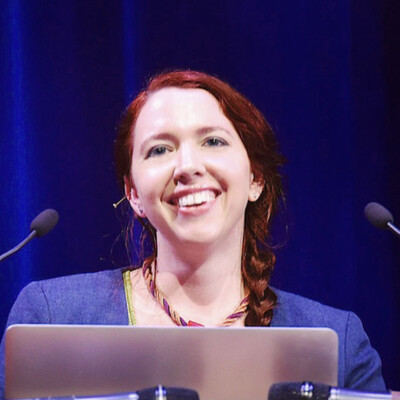
Founder & CEO
Sam Frons
A decade as a technologist and founder. Started in MES as a graduate researcher, then five years leading product across robotics, AI R&D in AgTech, biodiversity monitoring, and circular-construction startups. Translates science into shippable software.
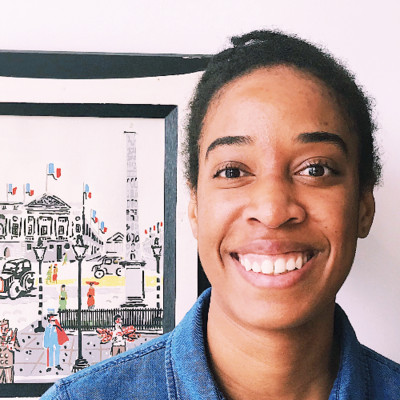
Head of Research Operations
Zakiya Sharpe
Runs research and data operations — extraction quality control, partner-experiment coordination, and the validation workflows that keep every measurement traceable. Turns a moving corpus into trustworthy ground truth.
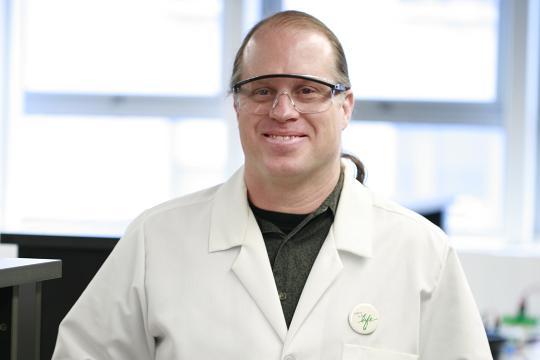
Chief Scientific Officer
Dr. Lane Gilchrist
Bioprocess engineer and active faculty member; Sam’s graduate advisor. Peer-reviewed authority that anchors the parameter ontology and validates extractions — the scientist customers and partners actually want to talk to.
The ask
$100K to first revenue.
Six months of usage data before Seed.
In 5 weeks
ISMET — the field’s top international conference. We launch the beta to its 400-person research community, debut our first experiment-recommendation results, and recruit 10 lab validation partners.
Q3 2026
Polish the customer-facing feasibility-study workflow. Sign the first 10 partner data agreements. Active-learning loop closed end-to-end.
Q4 2026
First paid industrial pilots in market (target: 2–3 at $25–50K each). Real revenue. Real deployment data flowing back.
Q1 2027
Seed round on six months of validated platform usage, paid pilot revenue, and a contractual data flywheel the next investor can underwrite.
Capital-efficient by design. Less dilution now, stronger leverage at Seed when the data tells the story. We can always raise more if a pilot proves the wedge faster — we shouldn’t raise more than we can metabolize this quarter.
Before you build,
you simulate.
Chips got Cadence.
Plants got AspenTech.
MES will get MessAI.